Mapping Data Synchronization Protocols Across Interstate Roulette Platforms and Their Effects on Reward Calculations in US Markets
Written by Ines Walter · Oct 26, 2026
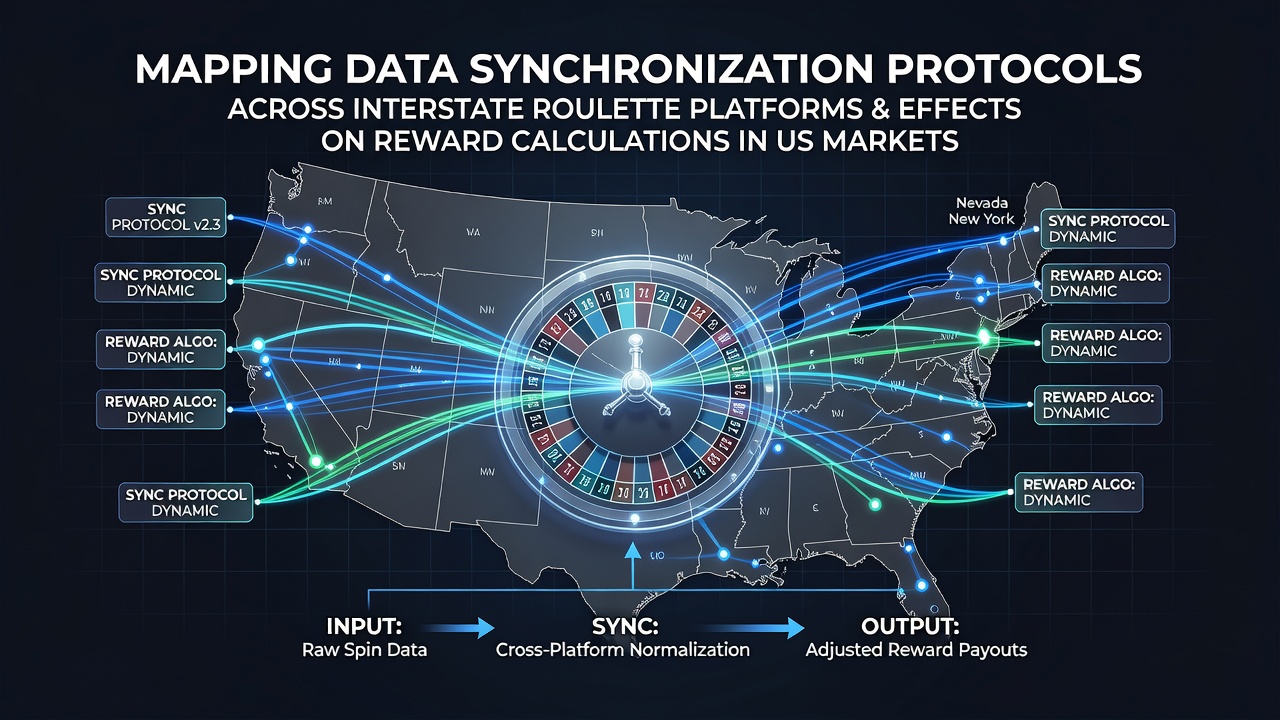
Mapping Data Synchronization Protocols Across Interstate Roulette Platforms and Their Effects on Reward Calculations in US Markets
Platforms operating roulette across multiple US states rely on data synchronization protocols to align player information in real time, and these systems determine how rewards such as comp points and loyalty credits accumulate when users move between jurisdictions. Researchers have documented several protocol types including API-based transfers, blockchain ledgers, and centralized cloud repositories that platforms deploy to handle interstate data movement while complying with varying state rules.
Core Elements of Interstate Synchronization
State-approved operators must transmit spin data, wager amounts, and session durations through secure channels that meet each jurisdiction's encryption standards, and this process occurs through standardized formats like JSON or XML that allow different state systems to interpret the information uniformly. Observers note that platforms licensed in states such as New Jersey, Pennsylvania, and Michigan often employ middleware solutions that translate local data structures into a common interstate format before storage or further processing occurs.
Data integrity checks happen at multiple points during transmission, and these checks prevent discrepancies that could alter reward eligibility when a player switches from one state's platform to another. Figures from regulatory filings reveal that synchronization events occur every few seconds during active play, which keeps reward balances current across all connected accounts.
Protocol Variations Across State Networks
Different regions adopt distinct approaches to data handling, and one study from the University of Nevada Las Vegas examined how East Coast versus Midwest platforms structure their synchronization layers. University research indicates that protocols in states with mature regulatory frameworks tend to include additional audit logs that track every data packet exchanged between systems.
Platforms in newer markets sometimes rely on lighter-weight solutions that prioritize speed over extensive logging, yet these still must interface with heavier systems when players cross state boundaries. Take one operator that expanded from a single-state license to multi-state coverage, and the transition required mapping each protocol's field definitions to avoid mismatches in player history records.

Direct Effects on Reward Calculations
Reward engines pull synchronized data to calculate comp points based on total handle and theoretical loss, and any delay or format mismatch in the incoming stream can shift the timing of point awards or alter tier progression for players active in multiple states. Evidence from industry reports shows that platforms using real-time synchronization achieve point updates within 500 milliseconds of each qualifying spin, whereas batch-processed systems may delay credits until the next scheduled transfer window.
Those who've studied this know that state-specific rules on bonus eligibility often require the reward system to verify the origin state of each wager before applying multipliers or tier bonuses. In October 2026 several platforms plan to activate enhanced protocol versions that embed jurisdiction tags directly into each data record, which should reduce calculation errors during interstate play sessions.
Regulatory Oversight and Compliance Requirements
State gaming authorities require operators to submit protocol documentation during license renewals, and these filings detail how data moves between systems while preserving player privacy under applicable laws. Pennsylvania Gaming Control Board records demonstrate that audits frequently focus on whether synchronization maintains accurate reward ledgers across all connected platforms.
Platforms must also demonstrate failover capabilities so that reward calculations continue uninterrupted if one state's connection drops, and testing protocols include simulated outages to verify that no points are lost or duplicated. Researchers discovered that consistent logging of these failover events helps regulators trace the source of any reward discrepancies that arise during cross-state activity.
Implementation Examples in Multi-State Operations
One major operator integrated its roulette platforms across three states by adopting a hybrid protocol that combines centralized reward ledgers with localized data caches, and this setup allows players to accumulate points from spins in any licensed market without manual reconciliation. Observers note that the approach reduced support tickets related to missing rewards by a measurable margin after rollout.
Another case involved smaller regional operators that partnered through a shared service provider to handle synchronization, and the arrangement enabled them to offer unified loyalty programs despite operating under separate state licenses. Data shows that such collaborations require precise mapping of each partner's reward formulas to prevent over- or under-crediting when the same player account appears in multiple systems.
Conclusion
Mapping data synchronization protocols across interstate roulette platforms reveals clear connections to reward calculation accuracy in US markets, and continued refinement of these systems supports consistent player experiences as more states authorize online offerings. Regulatory bodies continue to update standards, and platform operators adjust their technical approaches to align with evolving requirements while maintaining secure data flows between jurisdictions.